Origins and Discovery: Phocid seals expanded to the southern hemisphere during the Miocene, about 10 million years ago (Repenning, 1980). Elephant seals developed in the Antarctic; M. leonina colonized most of the anti-Boreal zone (Davies, 1958). The fossil record does not make clear which elephant seal species is the older of the two in the genus. The first description of the elephant seal is by Lord Anson who brought the original specimen, which he named a Sea-Lyon, to England from Juan Fernandez in 1744 (Laws, 1953). In the early part of the 19th century, sealers and whalers brought attention to the southern elephant seal by hunting them as a source of oil; hunting pressure on elephant seals increased as fur seals and whales became scarce (Bonner, 1982). It is estimated that over a million elephant seals were taken before the sealing industry ended in 1909 and began to recover from overhunting (Laws, 1994). Nevertheless, a government-licensed industry continued at South Georgia between 1909 and 1964 and bulls were taken in a few other places (Headland, 1984).
Nomenclature: The genus name, Mirounga, has a southern hemisphere origin, coming from miouroung, an old Australian Aboriginal name for elephant seals. Linnaeus's name for the species, leonina, was based on Lord Anson's erroneous description of their resemblance to a lion or a sea lion (Linnaeus, 1758).
Order: Carnivora
Sub-order: Pinnipedia
Family: Phocidae
Genus: Mirounga
Size, shape and distinctive characteristics
Size and Shape: The southern elephant seal is the largest of the pinnipeds. Bulls weight 1,500 to 3,000 kg with a maximum weight recorded of 3,700 kg (Ling and Bryden, 1981). Females vary widely in mass from 350 to 800 kg shortly after giving birth (Fedak et al., 1994). Adult males have distinctive secondary sexual characteristics besides size that females lack - an enlarged proboscis and thick, ruddy, rugose skin on the sides and underside of the neck. The pelage is short and the color is brown, black, gray or silver depending on animal age and time of year. The body is fusiform and has been modified to reduce drag while moving in the water, e.g., the penis and mammary glands are internalized when not in use. At certain times of the year, body composition approaches 50% blubber.
The distribution of southern elephant seals is circumpolar in the Antarctic with major concentrations on islands such as South Georgia, Macquarie and the Kerguelens and mainland sites such as Peninsula Valdes, Argentina (Laws, 1994). Antarctic and sub-Antarctic islands are used for breeding, molting and resting. The feeding range is a vast area that extends from the Antarctic Polar Front south to the continental shelf off the Antarctic continent or to the ice-edge surrounding it (Bradshaw et al., 2004; Fedak et al., 1994; Hindell et al., 1991).
Ecology and Behaviour
Ecology: M. leonina alternates periods on land for breeding and molting with long foraging periods at sea. Adult males forage at sea for about four months before and after the breeding season as well as the one-month molting period on the rookery. Females exhibit a similar pattern except that the post-partum foraging period is relatively brief (about 2.5 months) and the post-molt foraging period, which covers the entire gestation period, lasts eight months. The seals breed in the austral spring (early September to mid-November). Peak number of females is from October 3 to October 25, being later as one moves from north to south (McCann, 1985). At Macquarie Island, the adult males arrive in early August; pregnant females begin to arrive in mid-September, give birth a few days later and then their numbers reach a peak about October 16 before subsequently decreasing until all females have returned to sea by the end of November (Hindell and Burton, 1988). During January and February, adult females return to the rookery to molt the pelage, which lasts about one month; this is also a period when juveniles haul-out in great numbers. Adult males return to the rookeries to molt the pelage from November to April (Carrick and Ingham, 1962).
Behavior and breeding: Adult males arrive on the breeding grounds and fight with each other to establish dominance before the arrival of pregnant females. When females arrive, the most dominant bull prevents other males from approaching the females, who gather together in groups (harems) as protection from males that attempt aggressively to mate with them. A dominance hierarchy among males is established around each harem. When females come into estrus, high ranking males have ready access to mates while preventing low-ranking males from mating. Mating success is highly correlated with paternity (Fabiani et al., 2004; Hoelzel et al., 1999). Females give birth a few days after arrival on the rookery and then nurse the pups for three weeks before weaning them by returning to sea for an extended foraging trip. Females copulate during the last few days of lactation(Carrick et al., 1962; Laws, 1956).
Life History
Growth and Development: Pups weigh an average of 43 kg at birth, approximately a three fold increase in mass over the three week lactation period (Fedak et al., 1994). There is little mass gain during the first year but after that female mass and length increases steadily until reaching an asymptote at about six years of age. Male growth is more rapid especially at around the time of puberty at about age 5, when a growth spurt is observed. Males, more so that females, continue to grow in length until most of them are dead at about age 12 (Laws, 1953). The average expectation of life of mature females is about 10 years and that of males is 10-12 years; a bull may live to age 20 and a female to age 18 (Laws, 1953; Laws, 1960).
Foraging, Migration and Diet: Adults migrate twice a year from the island rookeries, where they breed and molt, to foraging areas at sea. Most males from Macquarie Island and Península Valdés forage in areas over the continental shelf or shelf break while the majority of females forage over deeper, offshore waters; some individuals of both sexes forage in warmer waters associated with the Antarctic Polar Front or with eddies from the convergence of warm and cold water currents (Campagna et al., 2006a; Campagna et al., 2006b; Slip et al., 1994). Throughout most of the time at sea, diving is continuous, deep (maximum of 1.5 km) and of long duration (maximum of 2 hrs). Approximately 90% of the time at sea is spent submerged, i.e., in transit or searching for prey and feeding. Differences in diving pattern suggest that both sexes feed on pelagic prey but only males appear to also feed on benthic prey. The seals feed on large quantities of fish and squid prey throughout the Southern Ocean; fish dominates the diet during the winter and when foraging around the Antarctic continental shelf and squid is most prevalent in the diet during the summer when foraging pelagically (Bradshaw et al., 2003). In a study of stomach contents of seals at Heard Island, 86% contained cephalopods of 17 species such as Psychroteuthis glacialis and Kondakovia longimana; 66% contained fish remains such as Dissostichus eleginoides, Electrona carlsbergi, E. Antarctica, and Gymnoscopelus nicholsi (Slip, 1995). Diet, however, is not fully understood in this species because traditional methods of determining diet, such as stomach analysis, are of dubious value because they sample only the last few days at sea in animals that spend long periods of time foraging.
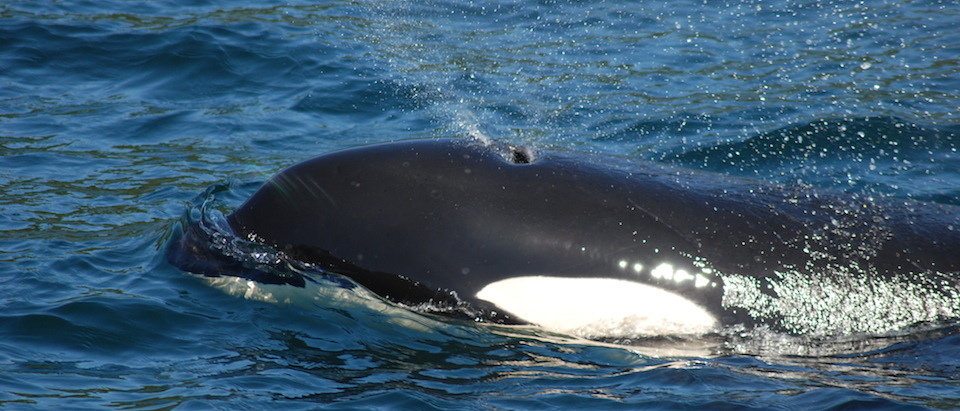
Predators: Killer whales, Orcinus orca, may prey on southern elephant seals in the area of the Crozet Archipelago (Guinet et al., 1992) and at Península Valdés, Argentina, but otherwise, few predatory observations have been recorded and the seals are considered free of predators.
Diet
See above
Global Abundance
Abundance and Population Trend: Southern elephant seals have a total world population estimated at 664,000 individuals (Laws, 1994), making it one of the most abundant seal species in the world. Nevertheless, the number of southern elephant seals has declined sharply in some areas of the Antarctic over the past 70 years. Notable declines have been observed at Macquarie, Campbell, Heard, Marion, and Signy. Numbers are considered stable at South Georgia, the Falklands and Gough. The Península Valdés colony on the mainland in Argentina was increasing in number until recently is now considered stable (Ferrari et al., 2009).
IUCN status
Classified as Least concern, however, recent declines in some areas must be considered in evaluating its status.
Genetic Diversity: There is low major histocompatibility complex (MHC) polymorphism in the southern elephant seal, as is generally the case in marine mammals compared with terrestrial mammals; this may be due to decreased exposure to microparasitic diversity in marine mammals compared with terrestrial mammals (Slade, 1992). Nucleotide diversity for mitochondrial DNA and nuclear DNA, however, is similar to that of humans and mice (Slade et al., 1998). Genetic diversity is southern elephant seals is at levels observed in other large mammals (Gales et al., 1989) in contrast to the low genetic diversity observed in the northern congener (Bonnell and Selander, 1974; Hoelzel et al., 1993).
Threat Assessment or Conservation Issues: Numbers of elephant seals associated with colonies in the South Indian and south Pacific oceans have declined markedly, which is cause for concern. For example, the Macquarie colony has declined by 50% in 30 years at a rate of -2% per year (Hindell and Burton, 1987). Otherwise, there are few direct threats to the southern elephant seal.
Burney Le Boeuf, University of California Santa Cruz leboeuf@ucsc.edu
Bonnell ML, Selander RK, 1974. Elephant seals: Genetic variation and near extinction. Science 184:908-909.
Bonner WN, 1982. Seals and Man. Seattle: University of Washington Press.
Bradshaw CJA, Hindell MA, Best NJ, Phillips KI, Wilson G, Nichols PD, 2003. You are what you eat: describing the foraging ecology of southern elephant seals (Mirounga leonina) using blubber fatty acids. Proc. R. Soc. Lond. B 270:1283-1292.
Bradshaw CJA, Hindell MA, Sumner MD, Michael KJ, 2004. Loyalty pays: potential life history consequences of fidelity to marine foraging regions by southern elephant seals. Animal Behavior 68:1349-1360.
Campagna C, Piola AR, Marin MR, Lewis M, Fernandez T, 2006a. Southern elephant seal trajectories, ocean fronts and eddies in the Brazil/Malvinas Confluences. Deep-Sea research I 53:1907-1924.
Campagna C, Piola AR, Marin MR, Lewis M, Zajaczkovski U, Fernandez T, 2006b. Deep divers in shallow seas: Southern elephant seals on the Patagonian shelf. Deep-Sea research I 54:1792-1814.
Carrick R, Csordas SE, Ingham SE, 1962. Studies on the southern elephant seal, Mirounga leonina (L.). C.S.I.R.O. Wildlife Research 7:161-197.
Carrick R, Ingham SE, 1962. Studies on the southern elephant seal, Mirounga leonina (L.). C.S.I.R.O. Wildlife Research 7:89-101.
Davies JL, 1958. The Pinnipedia: An essay in zoogeography. Geographical Review 48:474-493.
Fabiani A, Galimberti F, Sanvito S, Hoelzel AM, 2004. Extreme polygyny among southern elephant seals on Sea Lion Island, Falkland Islands. Behavioral Ecology 15:961-969.
Fedak MA, Arnbom TA, McConnell BJ, Chambers C, Boyd IL, Harwood J, McCann TS, 1994. Expenditure, investment, and acquisition of energy in southern elephant seals. In: Elephant Seals: Population Ecology, Behavior, and Physiology (Le Boeuf BJ, Laws RM, eds). Berkeley: University of California Press; 354-373.
Ferrari M, Lewis M, Pascual M, Campagna C, 2009. Interdependence of social structure and demkography in the Southern elephant seal colony of Península Valdéz, Argentina. Marine Mammal Science 25:681-692.
Gales NJ, Adams M, Burton HR, 1989. Genetic relatedness of two populations of the southern elephant seal. Marine Mammal Science
5:57-67.
Guinet C, Juventin P, Weimerskirch H, 1992. Population changes, movements of southern elephant seals on Crozet and Kerguelen Archipelagos in the last decades. Polar Biology 12:349-356.
Headland R, 1984. The Island of South Georgia. Cambridge: Cambridge University Press.
Hindell MA, Burton HR, 1987. Past and present status of the southern elephant seal (Mirounga leonina) at Macquarie Island J. Zool. Lond. 213:365-380.
Hindell MA, Burton HR, 1988. Seasonal Haul-Out Patterns of the Southern Elephant Seal (Mirounga leonina L.), at Macquarie Island. Journal of Mammalogy 69:81-88.
Hindell MA, Burton HR, Slip DJ, 1991. Foraging areas of southern elephant seals, Mirounga leonina, as inferred from water temperature data. Aust. J. Mar. Freshwater Res. 42:115-128.
Hoelzel AR, Halley J, O'Brien SJ, Campagna C, Arnbom T, Le Boeuf BJ, Ralls K, Dover GA, 1993. Elephant seal genetic variation and the use of simulation models to investigate historical population bottlenecks. J Heredity 84:443-449.
Hoelzel AR, Le Boeuf BJ, Reiter J, Campagna C, 1999. Alpha male paternity in elephant seals. Behav Ecol and Sociobiology 46:298-306.
Laws RM, 1953. The elephant seal (Mirounga leonina Linn.) I. Growth and age. Falkland Islands Dependencies Survey, Scientific Reports 8:1-62.
Laws RM, 1956. The elehant eal (Mirounga leonina Linn). II. General, social, and reproductive behaviour. Falkland Islands Dependencies Survey, Scientific Reports 13:1-88.
Laws RM, 1960. The southern elephant seal (Mirounga leonina Linn.) at South Georgia. Norsk Hvalfangsttid:466-76, 520-42.
Laws RM, 1994. History and present status of southern elephant seal populations. In: Elephant Seals: Population Ecology, Behavior, and Physiology (Le Boeuf BJ, Laws RM, eds). Berkeley: University of California Press; 49-65.
Ling JK, Bryden MM, 1981. Southern elephant seal -Mirounga leonina. In: Handbook of Marine Mammals (Ridgway SH, Harrison RJ, eds). London: Academic Press; 297-327.
Linnaeus C, 1758. Systema naturae: Regnum animale. , 10th rev. ed. Stockholm: Laurentii Salvii.
McCann TS, 1985. Size, status and demography of southern elephant seal (Mirounga leonina) populations. In: Studies of Sea Mammals in South Latitudes (Ling JK, Bryden, M.M., ed): South Australian Museum; 132.
Repenning CA, 1980. Warm water life in cold ocean currents. Oceans 13:18-24.
Slade RW, 1992. Limited MHC polymorphism in the southern elephant seal: implications for MHC evolution and marine mammal population biology. Proc. R. Soc. Lond. B 249:163-171.
Slade RW, Moritz C, Hoelzel AR, Burton HR, 1998. Molecular population genetics of the southern elephant seal Mirounga leonina. Genetics 149:1945-1957.
Slip DJ, 1995. The diet of southern elephant seals (Mirounga leonina) from Heard Island. Canadian Journal of Zoology 73:1519-1528.
Slip DJ, Hindell MA, Burton HR, 1994. Diving behavior of southern elephant seals from Macquarie Island: An overview. In: Elephant Seals: Population Ecology, Behavior and Physiology (Le Boeuf BJ, Laws RM, eds). Berkeley: University of California Press; 253-270.