New Zealand fur seals, Arctocephalus forsteri, were named by Lesson in 1828.
Order: Carnivora
Sub-order: Pinnipedia
Family: Otariidae
Genus: Arctophoca
Size, shape and distinctive characteristics
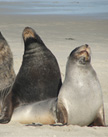
NZ fur seals are sexually dimorphic with adult males reaching up to 150kg in weight and 2m in length. Females only reach 30 to 50kg and 1.5m in length. Pups are born 3 to 4 kg in weight, reaching 12 to 14kg by weaning. NZ fur seals have long tapered muzzles with slightly upturned pointed noses and long whiskers. Their bodies are covered in dark olive brown to gray fur which when dry has paler guard hairs showing through.
NZ fur seals share their distribution with three other fur seals which they could be confused with including Australian, Antarctic and Sub-antarctic fur seals. Hybrid NZ x Antarctic fur seals are known which show characteristics of both species.
The New Zealand fur seal is found on rocky shores around New Zealand, Chatham Islands, New Zealand's sub-antarctic Islands (including Snares, Bounties, Antipodies, Auckland, Campbell and Macquarie Islands) and in South Australia, Western Australia and Tasmania. Their numbers are expanding throughout their range except for the west coast of the South Island of New Zealand.
Ecology and Behaviour
New Zealand sea lions are polygynous breeders, dominant males will mate with multiple females in a single breeding season - November to January, with each male territory comprising an average of five to eight females.
During the non-breeding season - February to October, the breeding sites are occupied by pups and young juveniles, whilst adult females alternate between periods at the breeding sites and periods foraging at sea. Adult males tend to disperse away from breeding sites and spend substantial time ashore in haul - out areas.
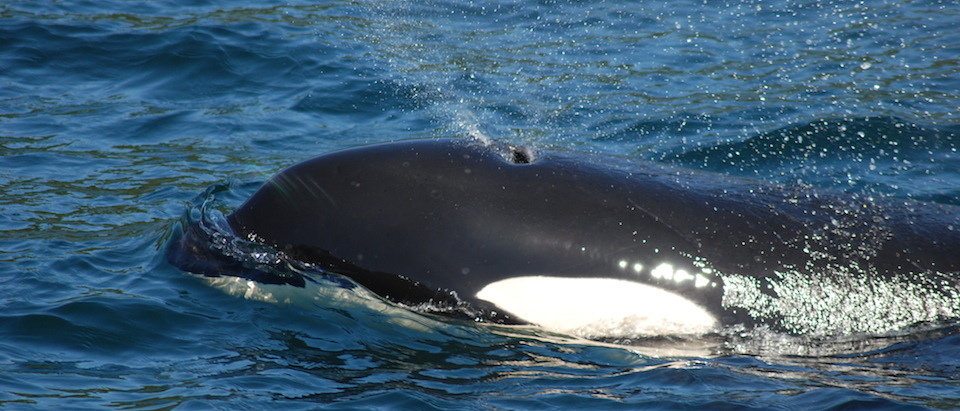
The New Zealand fur seal has a varied diet comprising squid, octopus, and fish. Female fur-seals dive usually 70-80 metres during early lactation. Later in their lactation they will dive to depths of 20-200 metres and further out to sea (80-100 km from shore). It is highly likely that the males can dive over 200 metres. Although it normally dives in search of prey for no longer than one or two minutes, some individuals have been recorded staying underwater for over 14 minutes at a time. At sea, the New Zealand fur seal actively grooms, and will raft up to sleep. Predators of the New Zealand fur seal include killer whales, sharks and possibly leopard seals at the sub-Antarctic islands.
Life History
New Zealand fur seals have a regular and annual breeding season from late November to mid January, with pup births peaking in mid to late December. Bulls arrive at the colony prior to the commencement of pupping and fight aggressively with each other to establish and defend territories. After an extended time feeding at sea, females arrive at the colony 2-3 days before giving birth to their single live pup on shore. Females remain with their pup for about ten days, then depart to feed at sea, returning regularly to suckle their pup with rich milk. Pups are weaned between 8 and 12 months of age.
During the breeding season, female fur-seals are gathered into "harems" (usually 6-8 cows) by the bulls within their territories. 7-8 days after the birth of her pup, the female comes into season and is mated by the resident bull. The development of the fertilised egg is delayed for approximately 3-4 months, followed by an active gestation of 8-9 months. Bulls may stay on shore and not feed for up to 8 weeks as they defend their harem and their territories. Females reach sexual maturity at around four to six years and males at around five to six years. However, it is unlikely that a male will command a breeding territory until at least eight to ten years of age.
Diet
New Zealand fur seals feed mainly on squid, octopus and schooling fish, with a small proportion of their diet also being made up of birds. The proportion of squid and octopus in a fur-seal's diet is higher during the summer months and more fish are consumed during the winter. NZ fur seals feed mainly at night when prey rises closer to the surface, and resting during the day.
Global Abundance
From the early 19th century, NZ fur seals were hunted to economic extinction throughout its range. Since the late 1800s, when fur seals in New Zealand and Australia were protected, numbers have increased gradually.
In New Zealand over the last three decades, fur seal numbers have risen appreciably on the Bounty Islands, northern South Island (Nelson-Marlborough), and eastern South Island; Kaikoura and Banks Peninsula, Otago. Numbers on the Snares Islands appear stable since the 1970's. Similar increases have also been reported in their Australian distribution.
However, on the West Coast of South Island NZ fur seal pup numbers have declined by between 29% and 39% on three rookeries studied from late January 1991 to late January 2007. The cause of these declines has not been established however is likely to be related to ongoing bycatch of mature females in the winter fishery for spawning hoki, on top of natural losses of pup production, pup survival and yearling survival during periodic warming events.
IUCN status
The New Zealand fur seal are listed as of Least Concern by the IUCN.
Prehistoric hunting was pursued by native peoples of Australia and New Zealand. Commercial sealing by Europeans was carried out in earnest in the early 19th Century and the population of these fur seals in New Zealand, Australia and the subantarctic was drastically reduced and whole colonies were wiped out. There have been sporadic culls as numbers rebounded in the 20th Century. At present, New Zealand fur seals are protected throughout their range by New Zealand and Australian laws. Threats today include entanglement in fishing gear and debris, drowning due to by-catch in trawl or set nets and the potential depletion of their food resource base due to intensive commercial harvesting of fish and squid.
B. Louise
Chilvers, Dept of Conservation
Baylis, A. M. M.; Nichols, Peter D. 2009. Milk fatty acids predict the foraging locations of the New Zealand fur seal: continental shelf versus oceanic waters Marine Ecology Progress Series 380 : 271-286
Baylis, A. M. M.; Page, B.; Goldsworthy, S. D. 2008. Effect of seasonal changes in upwelling activity on the foraging locations of a wide-ranging central-place forager, the New Zealand fur seal Canadian Journal of Zoology 86 : 774-789
Baylis, A. M. M.; Page, B.; Peters, K., et al. 2005 The ontogeny of diving behaviour in New Zealand fur seal pups (Arctocephalus forsteri) Canadian Journal of Zoology 83 : 1149-1161
Boren, L. J., Muller, C. G., and Gemmell, N. J. 2006. Colony growth and pup condition of the New Zealand fur seal (Arctocephalus forsteri) on the Kaikoura coastline compared with other east coast rookeries. Wildl. Res. 33: 497-505.
Boren, Laura; Morrissey, Mike; Gemmell, Neil J. 2008. Motor vehicle collisions and the New Zealand fur seal in the Kaikoura region Marine Mammal Science 24 : 235-238
Boren, Laura J.; Morrissey, Mike; Muller, Chris G., et al. 2006. Entanglement of New Zealand fur seals in man-made debris at Kaikoura, New Zealand Marine Pollution Bulletin 52 : 442-446
Bouma, Sietse; Hickman, Garry; Taucher, Doug 2008 Abundance and reproduction of the New Zealand fur seal (Arctocephalus forsteri) along the West Coast of the Waikato region, New Zealand Journal of the Royal Society of New Zealand 38 (2) : 89-96
Bradshaw, C.J.A.; Lalas, C.; Perriman, L.; Harcourt, R.G.; Best, H.; Davis, L.S. 1999. Seasonal oscillation in shore attendance and transience of New Zealand fur seals. Canadian Journal of Zoology 77: 814-823.
Bradshaw, Corey J. A.; Harcourt, Robert G.; Davis, Lloyd S. 2003 Male-biased sex ratios in New Zealand fur seal pups relative to environmental variation. Behavioral Ecology and Sociobiology 53 : 297-307
Bradshaw, Corey J. A.; Lalas, Chris; Thompson, Caryn M. 200. Clustering of colonies in an expanding population of New Zealand fur seals (Arctocephalus forsteri) Journal of Zoology (London) 250 : 105-112
Carey, P. W. 1992. Fish prey species of the New Zealand fur seal (Arctocephalus forsteri, Lesson). New Zealand Journal of Ecology 16: 41-46.
Crawley, M.C.; Wilson, G.J. 1976. The natural history and behaviour of the New Zealand fur seal (Arctocephalus forsteri). Tuatara 22: 1-29.
Dickie, G., and Dawson, S. 2003. Age, growth, and reproduction in New Zealand fur seals. Mar. Mamm. Sci. 19: 173-185.
Fea, N.; Harcourt, R.; Lalas, C. 1999. Seasonal variation in the diet of New Zealand fur seals (Arctocephalus forsteri) on Otago Peninisula, New Zealand. Wildlife Research 26: 147-160.
Gales, N. J.; Haberley, B.; Collins, P. 2000 Changes in the abundance of New Zealand fur seals, Arctocephalus forsteri, in Western Australia Wildlife Research 27 : 165-168
Goldsworthy, S. D. 1994. Distribution and abundance of New Zealand fur seals, Arctocephalus, forsteri, in South Australia and Western Australia. Wildl.Res. 21: 667-695.
Goldsworthy, Simon D. 2006 Maternal strategies of the New Zealand fur seal: evidence for interannual variability in provisioning and pup growth strategies Australian Journal of Zoology 54 : 31-44
Goldsworthy, Simon D.; Page, Brad 2007 A risk-assessment approach to evaluating the significance of seal bycatch in two Australian fisheries Biological Conservation 139 : 269-285
Harcourt, R.G. 2001. Advances in New Zealand mammalogy 1990-2000: Pinnipeds. Journal of the Royal Society of New Zealand 31: 135-160.
Harcourt, R.G.; Schulman, A.; Davis, L.S.; Trillmich, F. 1995. Summer foraging behaviour by lactating New Zealand fur seals Arctocephalus forsteri off Otago Peninsula, New Zealand. Canadian Journal of Zoology 73: 678-690.
Harcourt, R.; Davis, L. 1997. The use of satellite telemetry to determine fur seal foraging areas. In: Hindell, M.A.; Kemper, C. ed. Marine mammal research in the Southern Hemisphere. Vol.1. Status, ecology, and medicine. Chipping Norton, Surrey Beatty and Sons, Ltd. Pp. 137-142.
Harcourt, Robert G.; Bradshaw, Corey J. A.; Davis, Lloyd S. 2001 Summer foraging behaviour of a generalist predator, the New Zealand fur seal (Arctocephalus forsteri) Wildlife Research 28 : 599-606
Harcourt, Robert G.; Bradshaw, Corey J. A.; Dickson, Kate, et al. 2002 Foraging ecology of a generalist predator, the female New Zealand fur seal Marine Ecology Progress Series 227 : 11-24
Kirkwood, Roger; Warneke, Robert M.; Arnould, John P. Y. 2009 Recolonization of Bass Strait, Australia, by the New Zealand fur seal, Arctocephalus forsteri Marine Mammal Science 25 : 441-449
Lalas, C., and Harcourt, R. 1995. Pup production of the New Zealand fur seal on Otago Peninsula, New Zealand. J. Roy. Soc. N. Z. 25: 81-88.
Lalas, C., and Murphy, B. 1998. Increase in the abundance of New Zealand fur seals at the Catlins, South Island, New Zealand. J. Roy. Soc. N. Z. 28: 287-294.
Ling, J. K. 1999. Exploitation of fur seals and sea lions from Australian, New Zealand and adjacent subantarctic islands during the eighteenth, nineteenth and twentieth centuries. Aust. Zool. 31: 323-350.
Mattlin, R.H., Gales, N.J., Costa, D.P. 1998. Seasonal dive behaviour of lactating New Zealand fur seals (Arctocephalus forsteri). Canadian Journal of Zoology 76:350-360.
Page, Brad; McKenzie, Jane; Sumner, Michael D., et al. 2006 Spatial separation of foraging habitats among New Zealand fur seals Marine Ecology Progress Series 323 : 263-279
Page, Brad; McKenzie, Jane; Goldsworthy, Simon D. 2005 Inter-sexual differences in New Zealand fur seal diving behaviour Marine Ecology Progress Series 304 : 249-264
Page, Brad; McKenzie, Jane; Goldsworthy, Simon D. 2005 Dietary resource partitioning among sympatric New Zealand and Australian fur seals Marine Ecology Progress Series 293 : 283-302
Page, Brad; McKenzie, Jane; McIntosh, Rebecca, et al. 2004 Entanglement of Australian sea lions and New Zealand fur seals in lost fishing gear and other marine debris before and after government and industry attempts to reduce the problem Marine Pollution Bulletin 49 : 33-42
Robinson, S.; Gales, R.; Terauds, A., et al. 2008 Movements of fur seals following relocation from fish farms Aquatic Conservation 18 : 1189-1199
Robinson, S.; Terauds, A.; Gales, R., et al. 2008 Mitigating fur seal interactions: relocation from Tasmanian aquaculture farms Aquatic Conservation 18 : 1180-1188
Shaughnessy, P. D., Goldsworthy, S. D., and Libke, J. A. 1995. Changes in the abundance of New Zealand fur seals, Arctocephalus forsteri, on Kangaroo Island, South Australia. Wildl. Res. 22: 201-15.
Shaughnessy, P. D.; Dennis, T. E.; Seager, P. G. Status of Australian sea lions, Neophoca cinerea, and New Zealand fur seals, Arctocephalus forsteri, on Eyre Peninsula and the far west coast of South Australia Wildlife Research 32 (1) : 85-101 2005
Taylor, R. H. 1982. New Zealand fur seals at the Bounty Islands. N. Z. J. Mar. F/water Res. 16: 1-9.
Taylor, R.H. 1990. Records of subantarctic fur seals in New Zealand. New Zealand Journal of Marine and Freshwater Research 24: 449-502.